
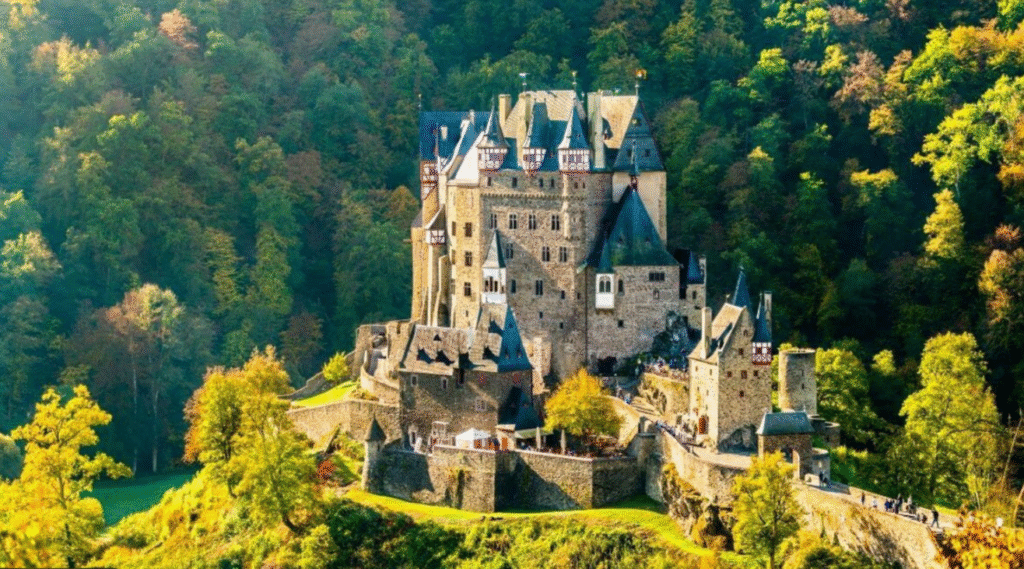
Germany’s Fairytale Route is a journey through a land of enchanting castles, dense forests, and picturesque villages that seem to have emerged from the pages of a storybook. This iconic travel route, inspired by the tales of the Brothers Grimm, winds through medieval towns, dramatic landscapes, and legendary sites that have shaped the cultural heritage of the country. From the towering spires of castles perched on rocky cliffs to the tranquil half-timbered towns where time seems to stand still, the Fairytale Route offers an immersive experience into the heart of Germany’s folklore and history. Along the way, visitors can explore grand fortresses, wander through ancient woodlands, and uncover the timeless charm of cobblestone streets lined with flower-adorned houses. The route is more than just a collection of fairy-tale settings—it is a journey into the soul of Germany’s past, where myths and legends intertwine with real-life history.

The Castles of Dreams and Legends
Germany’s fairytale castles are some of the most stunning in Europe, with their towering turrets, intricate facades, and sweeping landscapes. Neuschwanstein Castle, perhaps the most famous of them all, is a masterpiece of Romantic architecture, built by King Ludwig II of Bavaria as a tribute to medieval chivalry and Wagnerian operas. Rising above the Bavarian Alps, this castle is said to have inspired Walt Disney’s Sleeping Beauty Castle, and its breathtaking setting makes it one of the most photographed landmarks in the world.
Further north, Marburg Castle, perched high above the university town of Marburg, transports visitors to the Middle Ages. This Gothic fortress, once a residence of the Landgraves of Hesse, overlooks a town rich in history and student life. The castle’s medieval halls, grand banquet rooms, and impressive views provide an authentic glimpse into Germany’s feudal past.
The Wartburg Castle in Thuringia is another highlight of the Fairytale Route, known not only for its striking beauty but also for its historical significance. It was here that Martin Luther translated the New Testament into German, and the castle’s romantic setting and well-preserved interiors make it one of Germany’s most fascinating historic sites. The castle’s medieval architecture and scenic surroundings perfectly embody the magic and grandeur of the Fairytale Route.

The Enchanted Forests and Mystical Landscapes
Germany’s forests have long been a source of inspiration for folklore, providing the perfect backdrop for the legendary tales of the Brothers Grimm. The Spessart Forest, with its towering beech and oak trees, is steeped in history and mystery. It was once a hunting ground for nobles and a refuge for robbers, and today, its winding trails and dense canopies create an atmosphere of untouched wilderness. Travelers passing through the Spessart region can explore charming villages like Lohr am Main, often associated with the tale of Snow White. The town’s half-timbered houses, castle museum, and old-world ambiance make it easy to imagine the story coming to life.
The Black Forest, another iconic region along the route, is a place of dark, dense woodlands and picturesque villages where cuckoo clocks and traditional craftsmanship thrive. Triberg, home to Germany’s highest waterfall, offers an idyllic setting surrounded by lush greenery, while the nearby town of Schiltach exudes medieval charm with its timber-framed houses and scenic riverbanks. The Black Forest’s rolling hills and misty valleys provide the perfect setting for fairy tales, with local legends of witches, dwarves, and lost travelers adding to the mystique of the region.
The Reinhardswald Forest, often referred to as the Grimm Forest, is the legendary setting of Sleeping Beauty’s castle, Sababurg. This ancient woodland, with its gnarled trees and winding paths, feels like stepping into a storybook landscape. The castle, now partially in ruins, retains its romantic allure, while the surrounding meadows and trails invite visitors to explore the landscapes that inspired centuries of German folklore.

The Historic Villages and Fairytale Towns
The Fairytale Route is lined with some of Germany’s most beautiful villages, each with its own unique charm and connection to the country’s storytelling traditions. Hamelin, the town made famous by the tale of the Pied Piper, is one of the most beloved stops along the route. The town’s historic center, with its beautifully preserved Renaissance buildings and cobblestone streets, hosts regular performances that reenact the legendary story of the children who followed the piper’s music. Visitors can explore the Half-Timbered House Museum and follow the whimsical rat-shaped tiles embedded in the streets, leading to various landmarks tied to the legend.
Bremen, known for the tale of the Bremen Town Musicians, is another must-visit destination along the Fairytale Route. The city’s Marktplatz, with its UNESCO-listed town hall and Roland statue, is one of the most impressive squares in Germany. A bronze statue of the four famous animal musicians—a donkey, a dog, a cat, and a rooster—stands as a tribute to the Brothers Grimm tale, and rubbing the donkey’s hooves is said to bring good luck. Bremen’s Schnoor district, with its narrow alleys and medieval houses, provides a charming escape into the past.
Rothenburg ob der Tauber, one of Germany’s best-preserved medieval towns, is often described as a real-life fairytale village. With its towering city walls, winding streets, and picturesque market square, Rothenburg captures the essence of old-world Germany. The town’s Christmas market and year-round festive spirit make it feel like a place where magic is always in the air. The Medieval Crime Museum and the Night Watchman’s Tour offer fascinating insights into the town’s history, adding an element of intrigue to its storybook setting.
Alsfeld, with its enchanting timber-framed houses and market square, is another highlight of the route. The town’s Fairytale House Museum celebrates the storytelling traditions of the Brothers Grimm, bringing classic tales to life through exhibits and interactive displays. The town’s romantic architecture and rich folklore make it a hidden gem along the Fairytale Route.

The Enduring Legacy of the Brothers Grimm
The Fairytale Route is not only a journey through Germany’s stunning landscapes and historic towns, but also a tribute to the literary legacy of the Brothers Grimm. Jacob and Wilhelm Grimm collected and published the folk tales that have since become part of the world’s cultural heritage, including Cinderella, Little Red Riding Hood, Rapunzel, and Hansel and Gretel. Their stories, deeply rooted in German tradition, continue to inspire generations of storytellers, filmmakers, and travelers seeking to experience the magic of these timeless tales.
From grand castles and mysterious forests to charming villages where legends come to life, the Fairytale Route offers an enchanting escape into the heart of Germany’s folklore. Whether following in the footsteps of fairy-tale characters, exploring medieval streets, or simply taking in the breathtaking scenery, travelers along the Fairytale Route find themselves immersed in a world where history, myth, and reality merge seamlessly. With every castle tower, hidden pathway, and story-rich town, the route captures the imagination and evokes a sense of wonder, making it one of the most magical journeys in Europe.
